Building the Foundation: The Port’s Role in Cincinnati’s Convention District Transformation
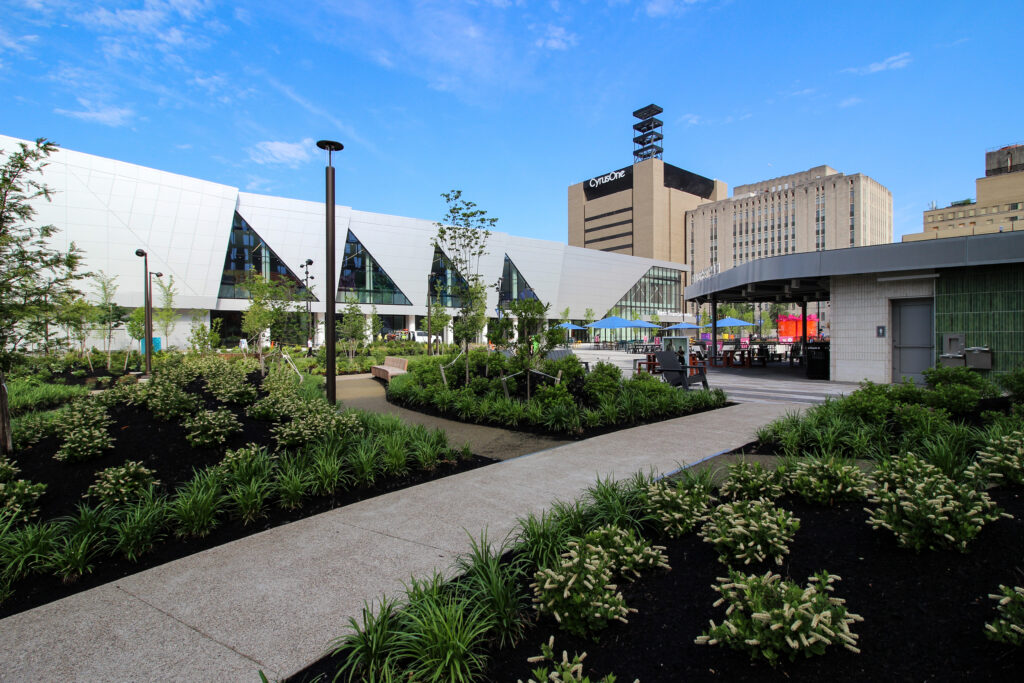
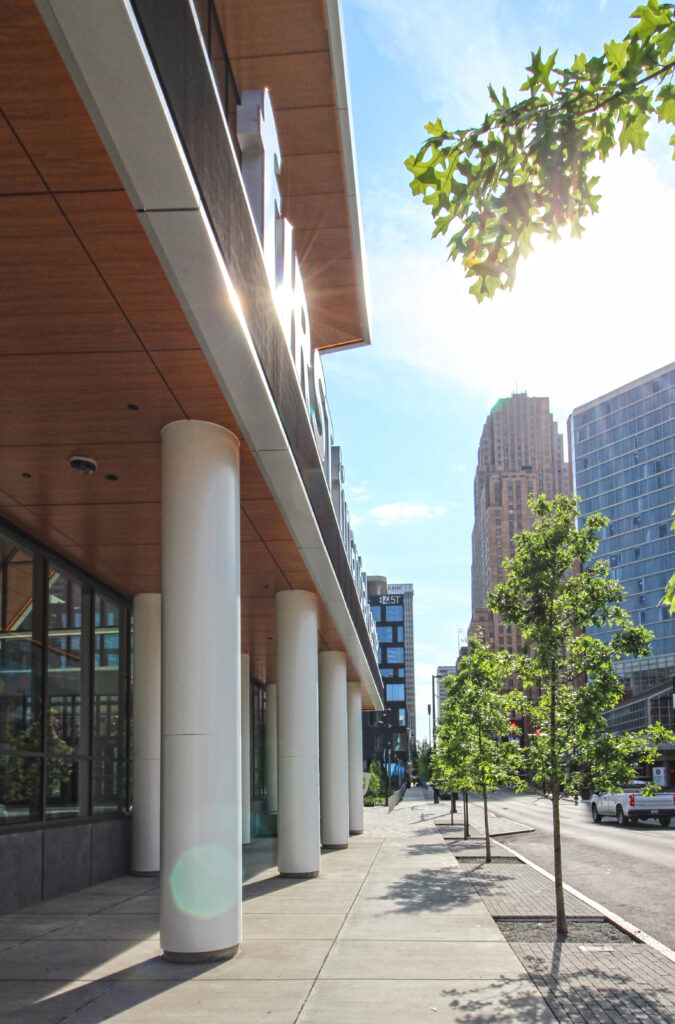
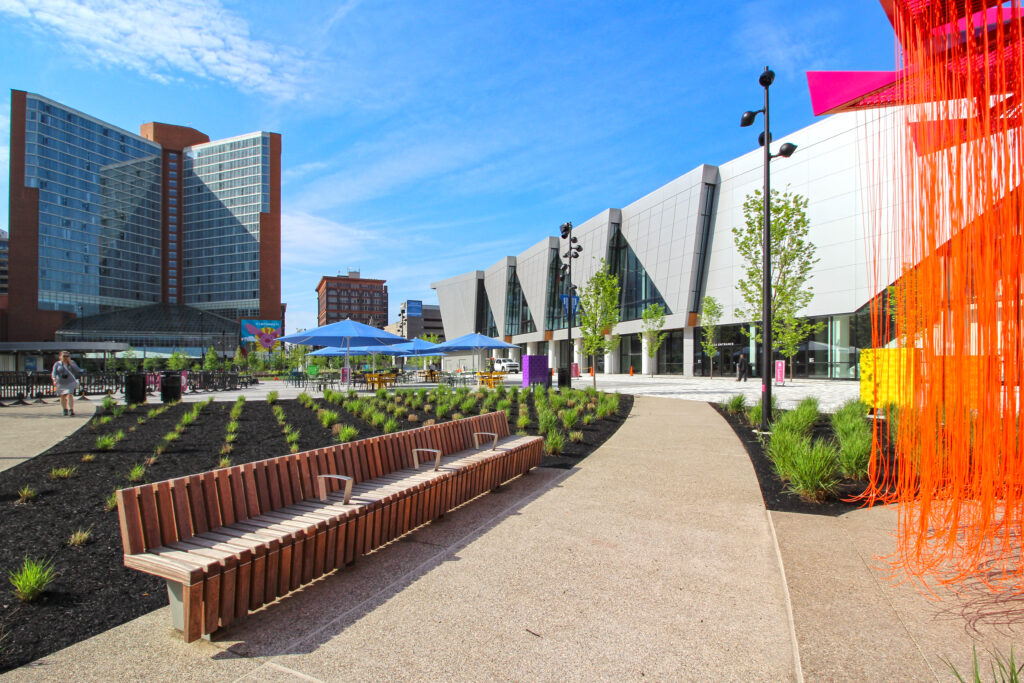
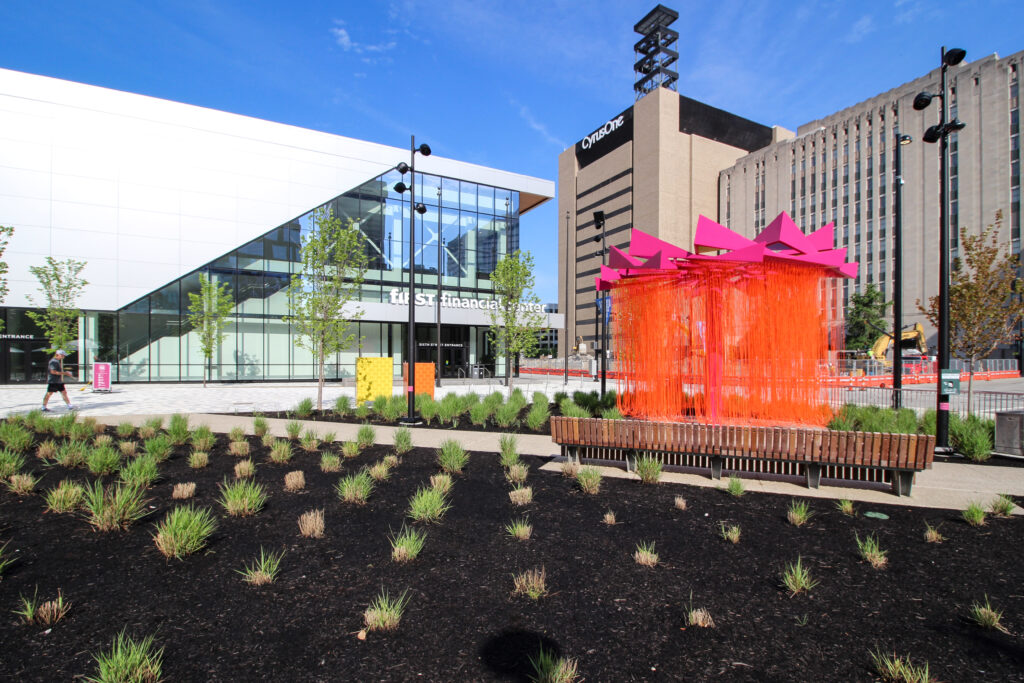
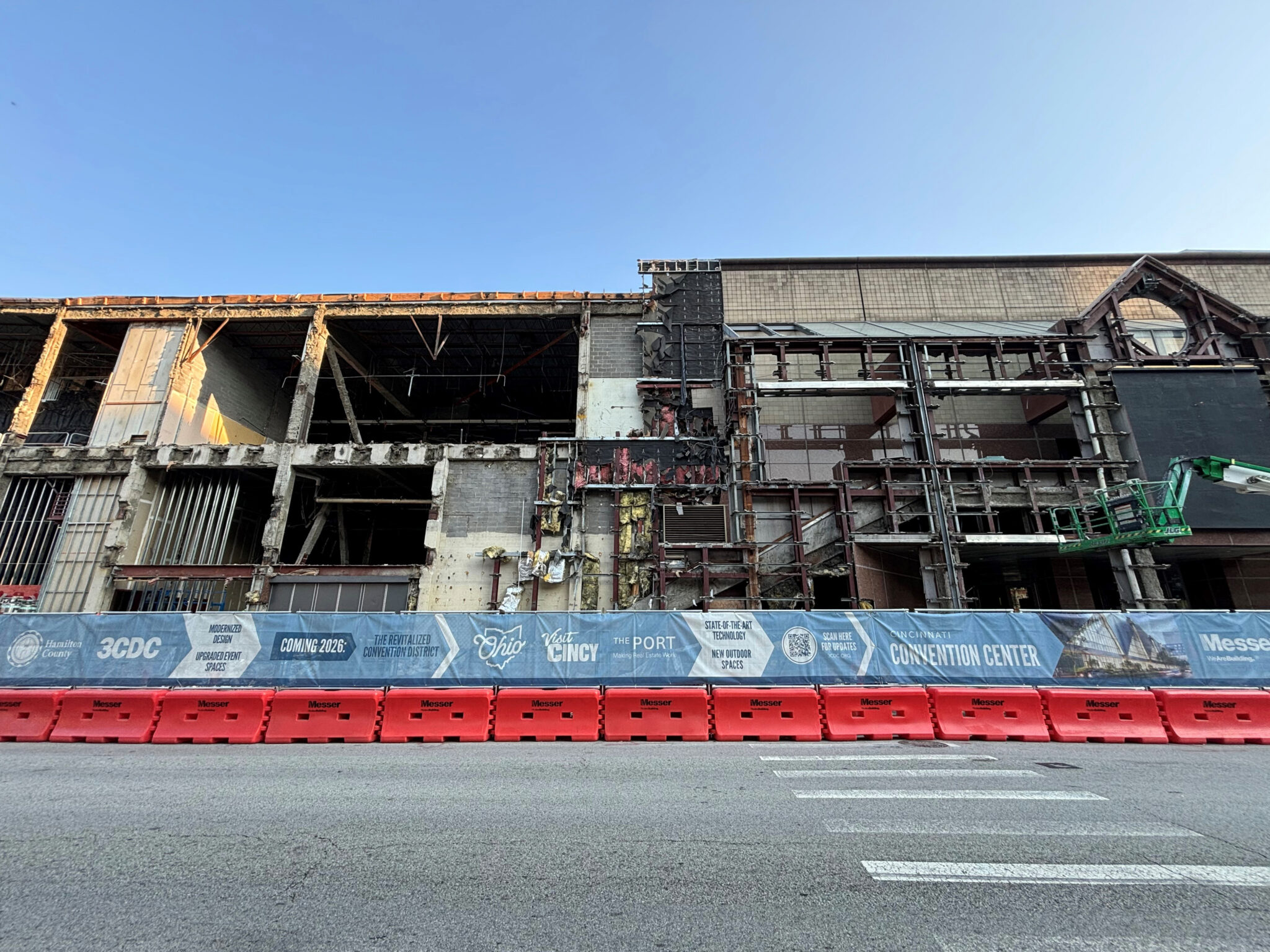
Walk through downtown Cincinnati today and you can feel it: something big is happening. The newly renamed First Financial Center has reopened after a $264 million renovation. Elm Street Plaza, two acres of green space and event space, opened to the public in November 2025. And now, a 700-room Marriott headquarters hotel has broken ground, with an opening targeted for late 2028 or early 2029.
The Convention District is the product of a robust public-private partnership. 3CDC serves as development manager for the district, working on behalf of the City of Cincinnati and Hamilton County. Portman Holdings is building the hotel, Visit Cincy is shaping how the district shows up to the world, and countless other partners are working together toward a shared vision for downtown.
Altogether, it represents more than $800 million in investment, remaking the heart of downtown into a true Convention District capable of competing for the kind of national conventions, association meetings, and marquee events that once passed Cincinnati by.
It's easy to look at the finished plaza or the gleaming convention center facade and think the story starts there. Long before the ribbon-cuttings, a quieter kind of work had to happen first: someone had to acquire the properties, prepare the sites, and assist with the capital stack to make the rest possible. That's where The Port comes in. It's the entity that acquires, holds, remediates, and helps close financial gaps to move projects forward. It's a role built on coordination rather than spotlight, but without it, there's no district to develop.
The Work Before the Work
Every major downtown project has a part that never makes it into the renderings: site control and readiness. Before construction could begin, someone had to deal with what was already there.
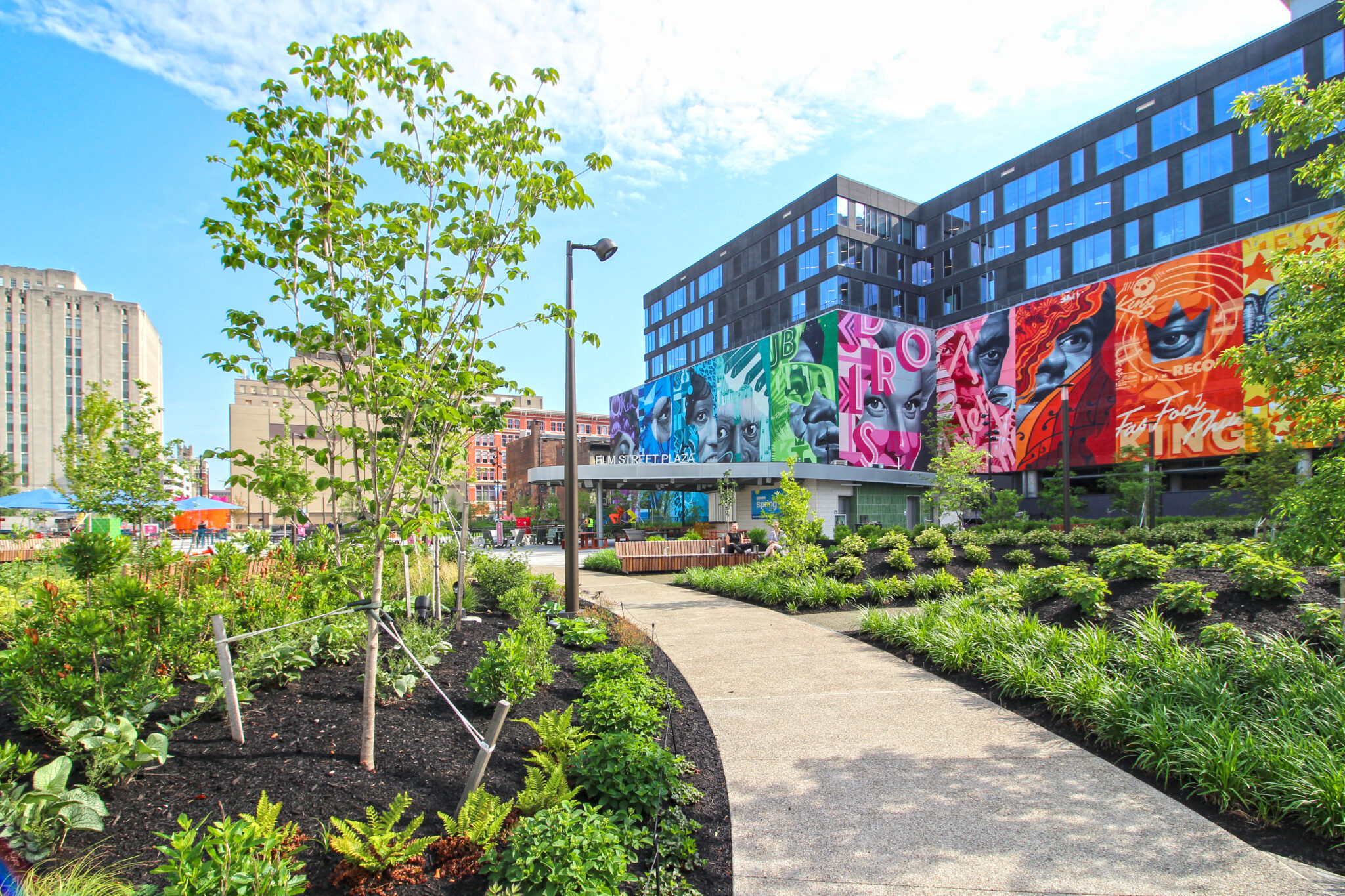
Elm Street Plaza is the clearest example. The site was the former Millennium Hotel, a blighted 872-room tower across from the convention center that had become a liability for the whole district. The Port acquired it in February 2020 for $36 million, financed through revenue bonds backed by county hotel tax revenue, then spent nearly two years clearing the building out and mechanically demolishing it, a process that wrapped in 2022. Once the site was cleared, 3CDC was able to step in and build the plaza in just 18 months, breaking ground in July 2024 and finishing in November 2025.
The former Whex Garage at 212 W. Fourth Street was acquired by 3CDC, held by The Port, and ultimately purchased by the City as it undergoes renovation in conjunction with the new hotel. The Port also issued $15 million in Development Revenue Bonds to assist with the garage acquisition and capital improvements. A similar pattern played out with the 680-space parking garage at 609 Elm Street, demolished to free up an entire city block for redevelopment, with 3CDC overseeing the work and the Hamilton County Landbank, a managed entity of The Port, securing a state grant to cover the cost of bringing the structure down. And the surface parking lot at 5th and Plum, the site selected for the new Marriott hotel, had been Port-owned since 2018 before being sold to Portman Holdings.
None of this is the glamorous part of redevelopment work. But it's the part that has to happen first.
What This Means for the Region
Step back from the financing structures and development work, and the impact of this project is straightforward: Cincinnati is competing for a category of business it has historically lost to other Midwest cities.
Cincinnati had a compact, walkable downtown with a strong dining and cultural scene, but it lacked a modern convention center and a modern headquarters hotel, the two things meeting planners look for when choosing a host city. That gap meant lost conventions, lost hotel tax revenue, lost restaurant and retail spending, and lost visibility for the region.
For residents, that translates into something concrete: hotel and sales tax revenue that funds public priorities, and steady visitor-facing jobs across downtown restaurants, retail, and hospitality. When conventions choose other cities, Cincinnati misses out on those benefits.
The renovated center is already proving the difference. Within its first year back open, it welcomed a mix of citywide conventions, national association meetings, and returning legacy events that hadn't considered Cincinnati in years.
The ripple effects extend well beyond the convention center's walls. Elm Street Plaza itself is proof of the concept; what was once a deteriorating hotel tower is now a gathering space with lush greenspace, outdoor Pavilion Bar, dog park, and a winter ice-skating rink. Within two blocks of the district, dozens of new restaurants, shops, and parking options have opened, businesses betting that convention traffic and a new downtown hotel will bring sustained foot traffic, not just occasional visitors. A revitalized Convention District also strengthens the broader case for downtown investment, the kind of momentum that makes a more walkable, livable downtown an easier sell for residents and businesses.
And for a city working to attract events like the NFL Draft, Sundance and other marquee national gatherings, having a first-class convention center and a true headquarters hotel within walking distance of each other isn't a nice-to-have. It's table stakes.
The Hotel: A Closer Look at The Port's Role
Groundbreaking for the hotel took place July 21, 2026; construction is expected to run through 2028 or early 2029, after which downtown will have, for the first time, a convention center and an anchor hotel built to work together rather than around each other.
The hotel itself will bring 700 rooms to downtown, including 36 suites, along with more than 62,000 square feet of flexible meeting space, a full-service restaurant and outdoor bar overlooking 5th Street, an event terrace with a lawn and deck, and a skybridge connecting directly to the convention center. It carries a price tag of roughly $540 million, financed through a complex stack of public and private investments.
The Port's piece of that stack is roughly $100 million in net bond proceeds, about a fifth of the total project cost. The bonds are expected to be backed by a combination of tax increment financing (TIF) revenue from the city, a special convention center hotel pledge of transient occupancy tax (TOT) from the city and county, and a new community authority charge through which downtown businesses opt in to contribute a portion of revenue toward construction. It’s a modest slice of the capital stack carrying an outsized share of the risk and complexity. The Port also entered into a structured lease arrangement with Portman Holdings, providing another tool to help reduce overall project costs.
In short, The Port isn't building the hotel. But between the acquisitions and public financing, it's one of the key reasons the hotel pencils out.
When the hotel opens, the full vision comes into focus: a walkable convention district stretching from the renovated First Financial Center, through Elm Street Plaza, to a 700-room hotel with its own ballrooms, restaurant, and skybridge connection back to the convention floor, the kind of infrastructure that draws events that may have skipped over Cincinnati in the past.
The Port's Bigger Picture
This project is, in many ways, a window into what The Port does across Hamilton County, just at a much larger scale. Whether it's stabilizing historic homes, assembling industrial sites for advanced manufacturing, or clearing the way for a downtown convention district, the throughline is the same: someone must do the unglamorous work before the full vision of a project can take shape.
The Convention District will be remembered for its plaza, its renovated ballrooms, and its new hotel. It's also worth remembering the work that had to happen first to set the stage, and the financing tools quietly assembled to make all of it possible. That's where The Port's fingerprints are: behind the scenes, using its tools, resources, and expertise to help transformational projects like the Convention District move forward.