Sedamsville, Block by Block
Sedamsville: A Rich Past and a Bright Future
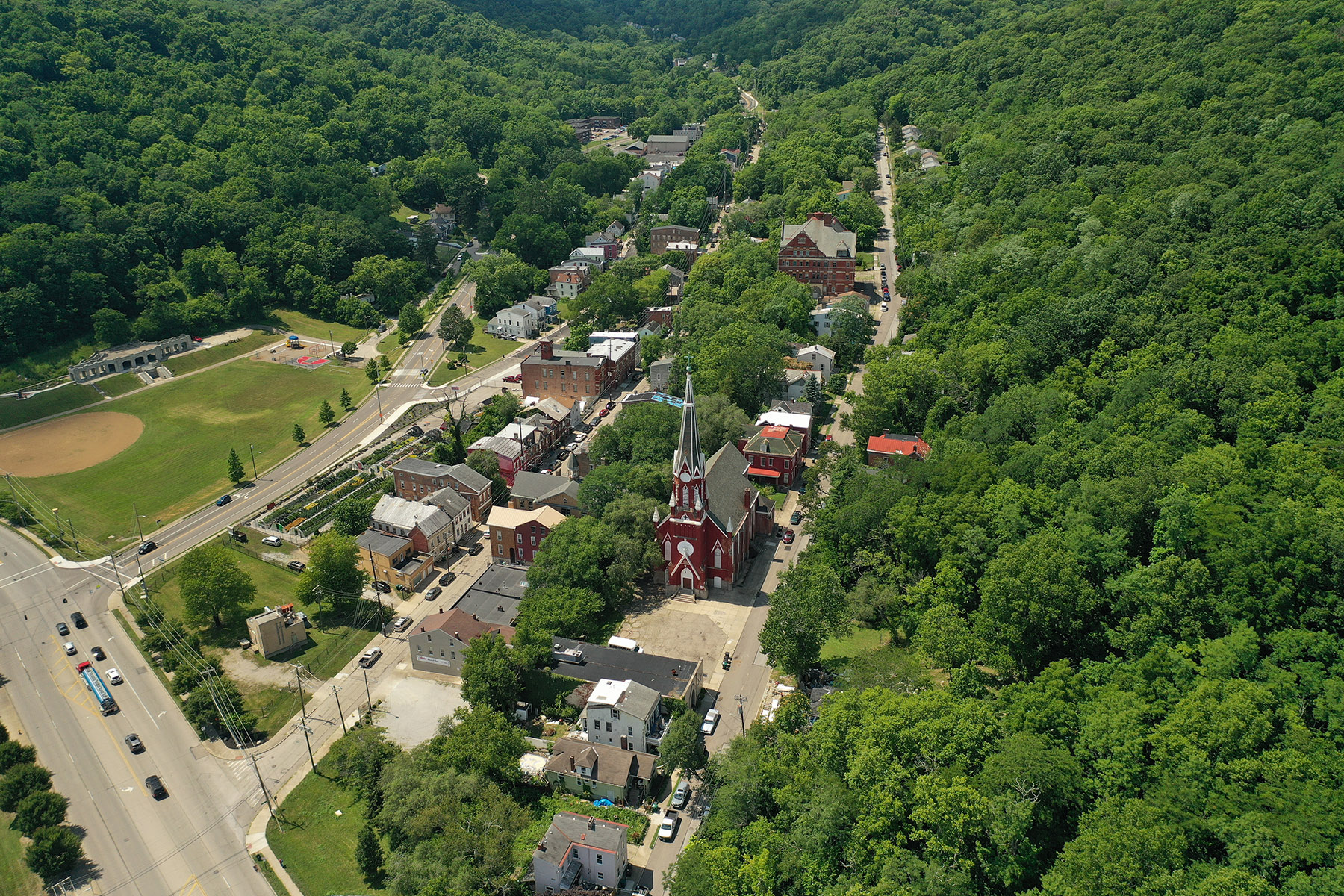
Tucked along the Ohio River on Cincinnati's West Side, Sedamsville is one of the city's oldest communities. It helped build the region's industrial backbone and through all of the challenges it has weathered, this historic neighborhood continues to stand proudly overlooking the river.
Here's the story of how Sedamsville came to be, what it's been through, and how The Port’s work is helping prepare the neighborhood for its next chapter.
Founded Before Cincinnati Grew Around It
Sedamsville traces its roots back to 1795, when Colonel Cornelius Sedam, a Revolutionary War veteran, settled along the Ohio River to help with the building of Fort Washington. The community he founded was incorporated as a village in 1835, within the newly organized Storrs Township, complete with its own mayor, town hall, fire department, and marshal.
It remained independent for another 35 years.
A River Town Built by Industry
What transformed Sedamsville from a small river village into a bustling community was the same force that shaped much of 19th-century Cincinnati: industry. The arrival of the Cincinnati and Indiana Railroad in the early 1860s connected Sedamsville to a growing regional economy. By the 1880s, electric streetcars had replaced horse-drawn wagons, bringing wave after wave of new residents to the neighborhood.
Sedamsville also has a surprisingly famous résumé entry. It was home to one of the first Fleischmann's Yeast factories in the country, a company founded by brothers Charles and Maximilian Fleischmann along with Cincinnati distiller James Gaff a name still found on grocery store shelves more than a century later.
Cincinnati annexed Sedamsville, along with the rest of Storrs Township, in 1870. By the turn of the century, more than 100 businesses lined what's now River Road between Steiner and Sedam Streets. The neighborhood's architecture from this era still tells that story today, including a Gothic Revival parish church, one of the city's few surviving Romanesque Revival public schools, and Fire Company No. 26, one of Cincinnati's oldest firehouses.
The Flood, the Road, and a Long Decline
Sedamsville's location along the Ohio River was one of its greatest assets, but it also became one of its greatest challenges. The Great Depression had already forced many of the neighborhood's businesses to close when the Flood of 1937 hit, making it impossible for many of them to rebuild.
Then came another turning point.
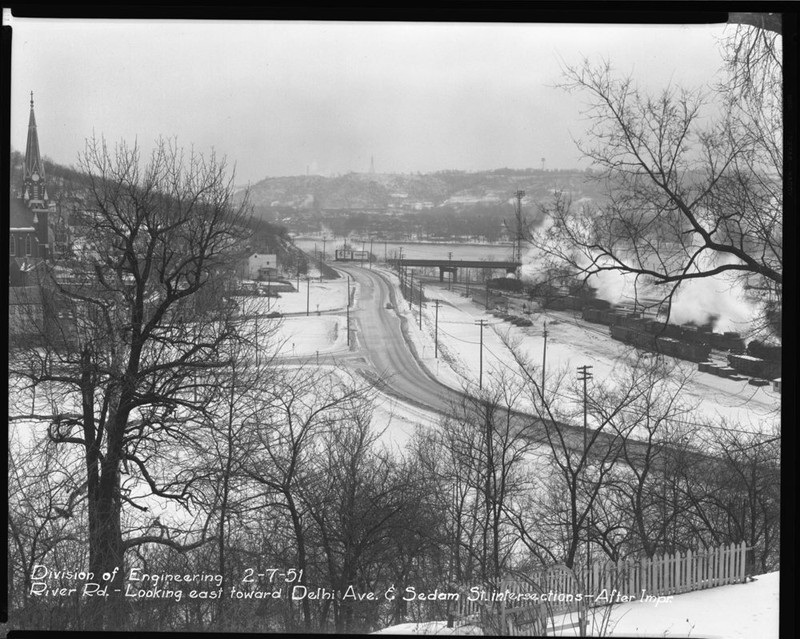
During the 1940s, the widening and realignment of River Road tore through what was left of the business district. The corridor that once supported more than 100 businesses was gutted. The local economy, transit patterns, and the very rhythm of daily life changed forever.
The decline continued into the late 20th century, exacerbated by absentee and negligent landlords who let many of Sedamsville’s storied buildings fall into disrepair.
Recognition, and a Second Chapter
Many of Sedamsville's historic structures were saved from demolition, thanks in large part to the efforts of the Cincinnati Preservation Association and generations of residents committed to protecting the neighborhood's character.
In 2008, the Sedamsville River Road Historic District was added to the National Register of Historic Places. By 2012, nearly the entire neighborhood had earned National Register designation, a rare distinction that reflects just how intact its 19th and early 20th century character remains.
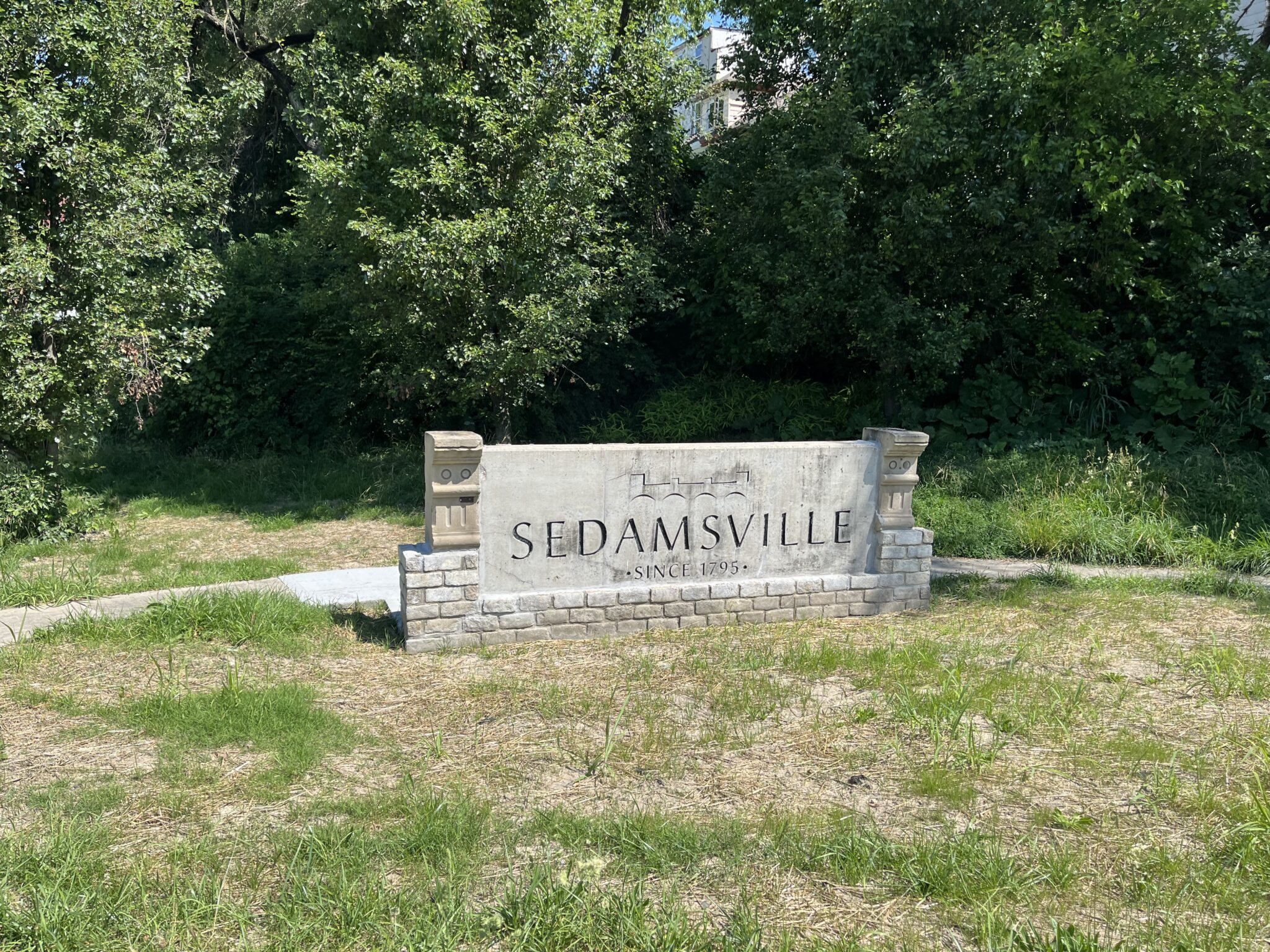
Even today, small signs of that pride show up in unexpected places, like the neighborhood's concrete welcome sign, which has recently received some well-deserved care and attention.
The Port's Work in Sedamsville Today
This is where our involvement picks up the thread.
Sedamsville is exactly the kind of neighborhood The Port exists to invest in: rich in historic architecture and neighborhood pride, with the opportunity for focused investment to help write its next chapter.
That work is well underway. Six long-neglected structures have been stabilized, backed by a city-supported investment of more than $792,000. The distressed properties were saved from further deterioration and readied for full rehabilitation. Currently, The Port and its partners are renovating 18 single-family homes, with phased construction that started in 2025 and is wrapping up in 2026.
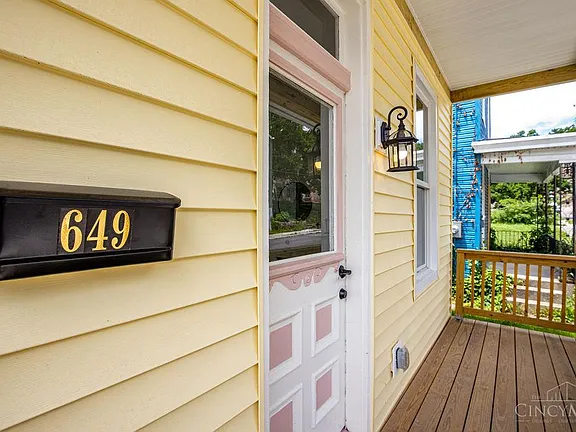
Two of those homes, 649 Sedam Street and 656 Sedam Street, sit directly across from one another. Both were originally built in the 1800s (1865 and 1890 respectively) and have been updated with modern kitchens, quartz countertops, and contemporary finishes that make a 130-year-old house feel ready for its next century. Each home is eligible for tax abatement and reserved for owner-occupants who want to put down roots in the neighborhood.
The work isn't just about attracting new homeowners.
In early 2026, The Port launched a home repair program to help longtime residents make critical repairs and remain in the homes and neighborhoods they’ve helped sustain for decades. And in a nod to the neighborhood's deep history, an Ohio Historical Marker has been proposed at the corner of Fairbanks Avenue and Sedam Street, pending approval.
Designing with the Neighborhood in Mind
These renovation choices weren't made one house at a time.
San Francisco's Painted Ladies use color to unify a whole streetscape rather than dress up a single building, and that's the same philosophy guiding our work in Sedamsville. Every home gets treated as part of one continuous block, with colors and fixtures chosen to work alongside the houses next door.
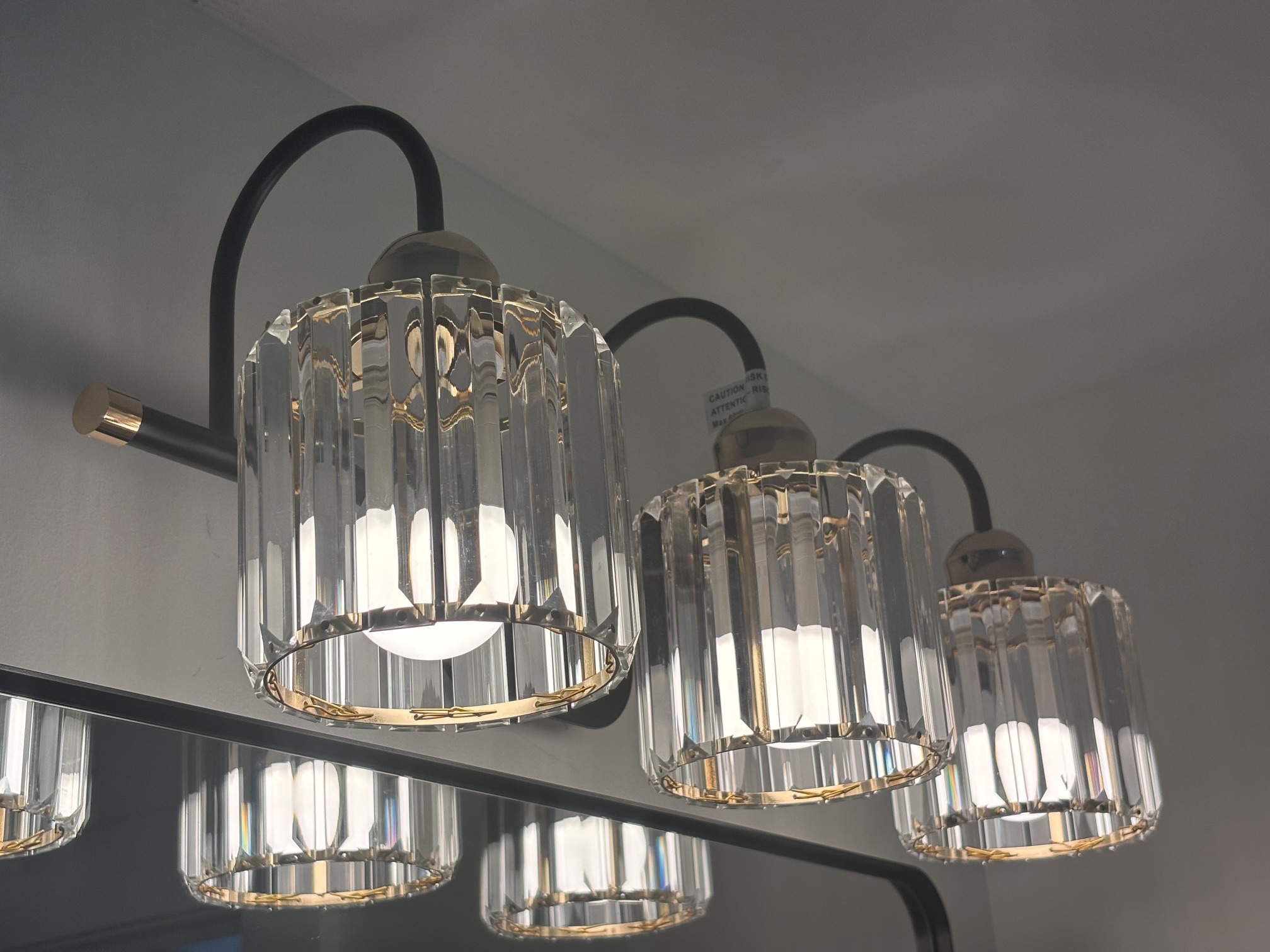
The lighting follows that same approach. Sedamsville came of age in the late 1800s, when modest worker cottages with Italianate influences were just beginning to incorporate electric lighting while still reflecting the craftsmanship of an earlier era. The fixtures lean into that transition: schoolhouse-style pendants indoors and classic lantern-style sconces outside. The kind of lights that would have felt at home in Sedamsville at the turn of the century. No single house is meant to stand out. The whole street is meant to feel thoughtfully restored, like it never stopped looking like itself.
The same philosophy shaped the landscaping.
When it came time for our residential team to source landscaping materials, Firehouse Nursery, located on the corner of Sedam Street and Fairbanks Avenue, felt like the natural choice. Owned by Herb Kohls, the family-run nursery has been part of the community's history for years, and now it’s helping shape its future.
Still Writing the Story
It’s a small piece of a much longer story, but it reflects the same spirit that has defined Sedamsville for nearly two centuries: people putting down roots, investing in their community, and believing in its future.
From its earliest days as a river settlement and a thriving industrial neighborhood, to the historic community that proudly overlooks the Ohio River today, Sedamsville has lived many lives. Through every chapter, one thing has remained constant: the people who continue to believe in this neighborhood.
The work happening today isn’t about recreating the past. It’s about honoring it while creating new opportunities for the people who will shape Sedamsville's future.
That’s how neighborhoods endure. One investment, one family, one restored home at a time.